

Leadership in the Polycrisis: How UK Defense Training Can Help Us Navigate a Future of Unprecedented Environmental Disruption
By Laurie Laybourn and Matt Ince
Edited by Erin Sikorsky and Francesco Femia
Introduction

The global scale, systemic interconnection, and severity of today’s climate and ecological crises has led researchers to conclude that the world has entered a new era—or overall state—of complex, cascading, and compounding risk.1 Some have labelled this the ‘polycrisis.’2 Approaches to leadership development in a defense context—which commonly focus on the ability to operate effectively under intense conditions—might have increasing relevance for civilian leaders wanting to enhance their capacity to respond to this emergent polycrisis era. We undertook research exploring these approaches, utilizing structured workshops and interviews with around thirty senior officers and personnel across the United Kingdom (UK) Defense enterprise. We found that the strong emphasis placed on physical and mental resilience, situational rehearsal, and an initiative mindset grounded in organizational structure and team ethos will increasingly have a broader leadership applicability as the destabilizing consequences of the climate and ecological crisis grow. This briefer explores our findings.
(more…)
Climate Security at the 2023 Spring Meetings of the World Bank Group and the International Monetary Fund
By Elsa Barron and Patricia Parera
As noted by the 2022 US National Security Strategy (NSS) 2022, “The climate crisis is the existential challenge of our time.”
In this context of enhanced urgency on the crisis, climate change– and its interconnectedness with peace, development, and humanitarian challenges– was a key subject of discussion at the 2023 Spring Meetings of the World Bank Group (WBG) and the International Monetary Fund (IMF) in Washington, DC this April. Climate change creates disproportionate and adverse effects for at-risk populations and as the negative impacts of climate change intensify, they can contribute to compounding security risks such as loss of livelihoods, competition for natural resources, migration, internal displacement, political unrest, diminished social cohesion, increased recruitment by violent extremist organizations (VEOs), malign influence by state and non-state actors, and more military deployments in response to an increased scale and tempo of natural disasters.
One of the best ways to prevent these downstream impacts is to invest in adaptation and resilience in the communities that need it most. Multilateral development banks (MDBs) such as the WBG and the IMF are one resource for delivering these climate security investments as temperatures and tensions rise.
In its feature story on the meetings, the World Bank Group (WBG) notes that, “Positive strides were taken during the meetings in the ongoing Evolution Roadmap process, which is designed to bolster the WBG’s ability to confront the complicated development landscape and devote more resources to global challenges, like climate change, pandemics, and fragility.” The continued acknowledgment of these three interconnected, systemic global challenges by multilateral development banks will hopefully create important levers for climate security investments and action.
The Spring Meetings served as a progress check for the Evolution Roadmap, which, in its introduction, acknowledges that “Climate change impacts, ranging from floods and droughts to locust invasions, are jeopardizing hundreds of millions of lives and livelihoods, creating hunger, conflict and forced displacement,” and later asks how these global challenges can inform the World Bank’s core mission. The following discussions from the Spring Meetings provide important context for answering that question.
Investing in Food and Water Security
Global security hinges on water security. Dr. Nadeem Javaid, Chief Economist, Government of Pakistan, and Dr. Claudia Sadoff, CGIAR Executive Managing Director explained in the forum, “Financing for Water Action in a Changing Climate,” that water stress or water-related disasters are often the first way that communities directly experience the impacts of climate change. They argued that in addressing near-term water crises, governments and investors need to move beyond humanitarian responses alone, which are traditionally implemented after a crisis has struck.
The presenters posited that development funds can build better prediction, preparation, and resilience systems that will make future crises less devastating. Examples given in the same session include support for policy-targeted research to improve the quality and timing of responses to water disasters such as more accurate long-range flood forecasting, flood and crop insurance for farmers, stronger soil moisture management and drainage, more drought-tolerant wheat and maize, rice that can withstand greater saltwater intrusion, and solar irrigation practices that already support millions of farmers in South Asia. Systemic global challenges highlight the need to break down the silos between climate, security, humanitarian, and development actors in planning for and implementing these solutions.
Meeting Adaptation and Security Needs
In a session titled, “Pathways for Peace: Progress on Preventing Conflict,” the Danish Minister for Development Cooperation and Minister for Global Climate Policy, Dan Jørgensen, explained that adaptation to climate change and conflict prevention are a single issue, pointing to the significance of the US CNA Military Advisory Board identifying climate change as a challenge for security, nearly a decade before the creation of the Sustainable Development Goals (SDGs) as global targets.
In creating climate adaptation solutions that promote peace, many discussants emphasized the importance of addressing increasing migration as armed conflict, violence, climate change, and economic shocks have increased the number of displaced people. Policy planning and financial investments related to human mobility are key to determining outcomes for communities on the move.
Some Pacific Island nations are already engaging with relocation as an adaptation measure. In a session titled, “The Imperative of Climate Change Adaptation in East Asia and the Pacific,” a representative from Fiji highlighted the inclusion of relocation as an adaptation strategy in the Climate Change Act 2021. However, relocation raises serious questions about preserving sovereignty and culture, which a representative from the Marshall Islands emphasized in a definition of security that included three components: the nation, its people, and its thousands-year-old culture. Investment in adaptation planning and consultation can equip nations to uphold this holistic definition of security.
Tackling Debt and Climate Finance
There is a direct relationship between debt and climate shocks, said Ulrich Volz, Professor of Economics and Director of the Centre for Sustainable Finance at SOAS University of London at a session on “Scaling up Climate Finance in Times of Debt Crisis.” Pakistan’s extreme flooding in 2022, illustrative of climate security risks, is a warning of crises to come. The humanitarian and economic costs of this disaster include nearly two thousand lives lost, eight million people displaced from their homes, fifteen billion dollars wiped from the economy, and decades of hard-earned socio-economic gains swept away.
In this case and others, recovering from disaster can create overwhelming debt, making investments to prepare for future disasters untenable. In many countries today, addressing debt crises is a precondition for accelerating climate action. Targeted liquidity is required to enable the energy transition, adaptation to the impacts of extreme weather, and assurance of security in light of increasing future climate impacts. Multilateral development bank reform is one opportunity to reduce the debt burden for countries facing climate disasters and work towards greater security in outcomes.
The current state of interconnected systemic challenges, climate adaptation needs, and debt burdens creates an imperative for including climate security analysis in decisions relating to climate finance investments and further integrating climate, security, humanitarian, and development actors. The World Bank Group and the International Monetary Fund should continue to pursue these avenues, and given rapidly-rising risks, take more significant and urgent actions in parts of the world most vulnerable to the security implications of a changing climate.
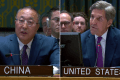
The Geopolitics of Climate Change: China and the United States at the UN Security Council
On 13 June, the United Nations Security Council (UNSC) held a ministerial-level open debate on climate change, peace and security—the latest in a series of UNSC meetings on the topic. While many ministerial statements focused on the nexus of climate change, instability, and conflict, the conversation underscored how today’s competitive geopolitical dynamics are complicating good-faith efforts to address climate security in such multilateral fora. Statements from China, in particular, suggest it sees a geopolitical opportunity in such discussions. Namely, due to the United States and other countries in the Global North failing to live up to their commitments to provide climate finance, especially adaptation funds, to the Global South.
In last week’s meeting, China used its time at the microphone to level a series of pointed comments aimed implicitly at the United States and the European Union (EU). Beijing’s Permanent Representative to the UN, Zhang Jun, argued there were three areas in which the UNSC should focus its attention.
(more…)
Are We Ready for the Terror Threat Posed by El Niño?
Erin Sikorsky | This piece was published by The Cipher Brief
OPINION — Imagine the U.S. government had credible information that a terrorist group was planning attacks in multiple cities across the globe. Attacks that could result in the deaths of hundreds of people, the destruction of critical infrastructure, and military installations. Attacks that could disrupt food and water security for millions and require the deployment of thousands of soldiers to respond.
Of course, the United States would do everything in its power to prevent and prepare for such a threat. The issue would immediately rise to the top of the agenda for the National Security Council and the Intelligence Community. Task forces would be created, Presidential briefings given, and resources poured in to analyze, warn about, and address the risk.
Now replace “terrorist group” with “El Niño.” Scientists are urgently warning of ‘a spike’ in global temperatures as the global climate pattern – known as El Niño – arrives and intersects with already rising temperatures driven by climate change. We know from experience that extreme heat can cause mass death, critical infrastructure damage, economic and political strain, and can lead to military deployments.
Last year, (which ranked among the hottest on record) the World Health Organization estimated that Europe saw 15,000 heat related deaths – compared to 6,701 deaths globally from terrorist attacks.
Already this spring, extreme heat waves have hit Asia, the Mediterranean and parts of the Northern Hemisphere, with Vietnam and Laos recording their highest temperature ever and unprecedented early-season wildfires in Canada burning nearly 1 million acres.