
Home » Posts tagged 'US military' (Page 3)
Tag Archives: US military
Climate Change, National Security and the Big Blue Rabbit
 Stars and Stripes magazine’s Wyatt Olson recently published a very interesting and thorough article titled “PACOM not waiting for politics to plan for climate change challenges.” The article details the reasons U.S. Pacific Command is taking climate change seriously, and some of what it’s doing to combat the threat.
A great quote from the piece, which perfectly encapsulates the national security community’s risk management approach to climate change, comes from Brig. Gen. Mark McLeod. He stated:
Seventy percent of the bad storms that happen in the world are in the Pacific,” he said. “Call it climate change, call it the big blue rabbit, I don’t give a hoot what you call it — the military has to respond to those kinds of things.
Climate-Security Rundown: A List of Recent Events You May Have Missed
 There’s been a lot of activity in the U.S. climate-national security space in recent weeks, including insightful commentary from retired flag officers and national security officials, and hearings in the U.S. Congress. Below is a short list of those happenings, including links to summaries and sources. If we have missed anything, please let us know in the comments section below! (more…)
General Ron Keys Talks Climate Change and Security in Iowa
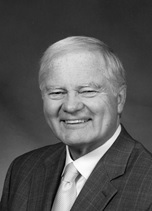 Retired four-star Air Force General Ron Keys, member of CNA Corporation’s Military Advisory Board (MAB), and our own Advisory Board, is in Iowa this week talking about the risks and opportunities associated with a changing climate. This comes on the heels of a landmark report release from the MAB, titled “National Security and the Accelerating Risks of Climate Change.”
Yesterday, General Keys spoke with “Iowa policy-makers and agriculture leaders” about climate change impacts on crop production, stating:
“That’s what we mean when we talk about a catalyst for conflict…When people don’t have enough to eat, when people don’t have enough water, when people don’t have a way to make a living, then they start to move or the[y] start to be activists…or the government can’t support them any longer and so you have, perhaps, radicals taking over certain areas of the world.”
Today, General Keys will speak at the opening of Iowa’s largest solar farm in Kalona. In advance of that, General Keys penned an Op-Ed for The Des Moines Register. In it, he talks about the effect climate change and a dependence on oil has on U.S. military infrastructure and operations, and how the military is addressing those issues. He states:
The military has long been looking for ways to reduce demand, diversify supply and advance the use of renewable options both here at home and on the battlefield. In recent wars, transporting and protecting access to fuel supplies has put our troops in greater danger. Historically, our dependence on oil has tied our nation to troubling regimes in parts of the world that are neither the most stable nor the most friendly to American interests.
These are all good reasons to look for solutions now.
There is another challenge, too: As a senior officer with responsibility for military installations around the world, I saw the beginning effects of climate change as long-term droughts and flooding began to threaten bases and training ranges. Extreme weather events were a wake-up call, showing what can happen as storms get stronger and weather patterns change.
Today, the Department of Defense is analyzing plans for at least 30 bases, posts or ports in the face of predicted sea-level rise that may make some unusable — more good reasons to look for solutions now.
Follow us on Twitter @CntrClimSec for more on General Keys’ visit to both Kalona and Camp Dodge (where he’s discussing efficiency with the Iowa National Guard).
Pres. Obama to West Point Graduates: Climate Change A National Security Crisis
 President Obama delivered the commencement address to the United States Military Academy in West Point, NY this afternoon. The speech was a much-anticipated view into the President’s new, “postwar” foreign policy strategy.
In the speech, President Obama made his bottom-line explicit: (more…)