

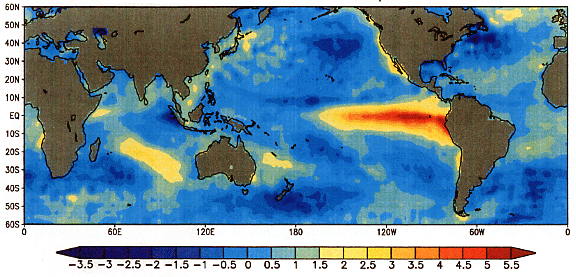
Adding climate change to the mix could complicate things even further. The relationship between El Niño and climate change is still being explored, but some studies (see IPCC 4th assessment report) show that climate change may lead to more frequent El Niño-like conditions.
If Hsiang and his colleagues are right, and the IPCC’s assessment holds, we could be in for a future of increased civil conflict.
A Peace-Building Opportunity
On the other hand, since some models are able to predict El Niño up to two years in advance, and we have reliable data on climate change, the results of this study open up an opportunity to build resiliency and robust conflict prevention measures.
For centuries, historians and practitioners have debated the causes of conflict. After two world wars in the last century, political leaders were certain enough about some of the answers that they created international institutions designed to prevent war and build peace. They didn’t require 100% certainty before institutionalizing such conflict-prevention measures. Not doing so was deemed too great a risk.
As we gather more and more data on what contributes to conflict, including data on climate cycles and climate change, we should refine these institutions (and build new ones, if necessary) to better prevent conflict and strengthen the resiliency of nations.
The UN Security Council might be a good start.