

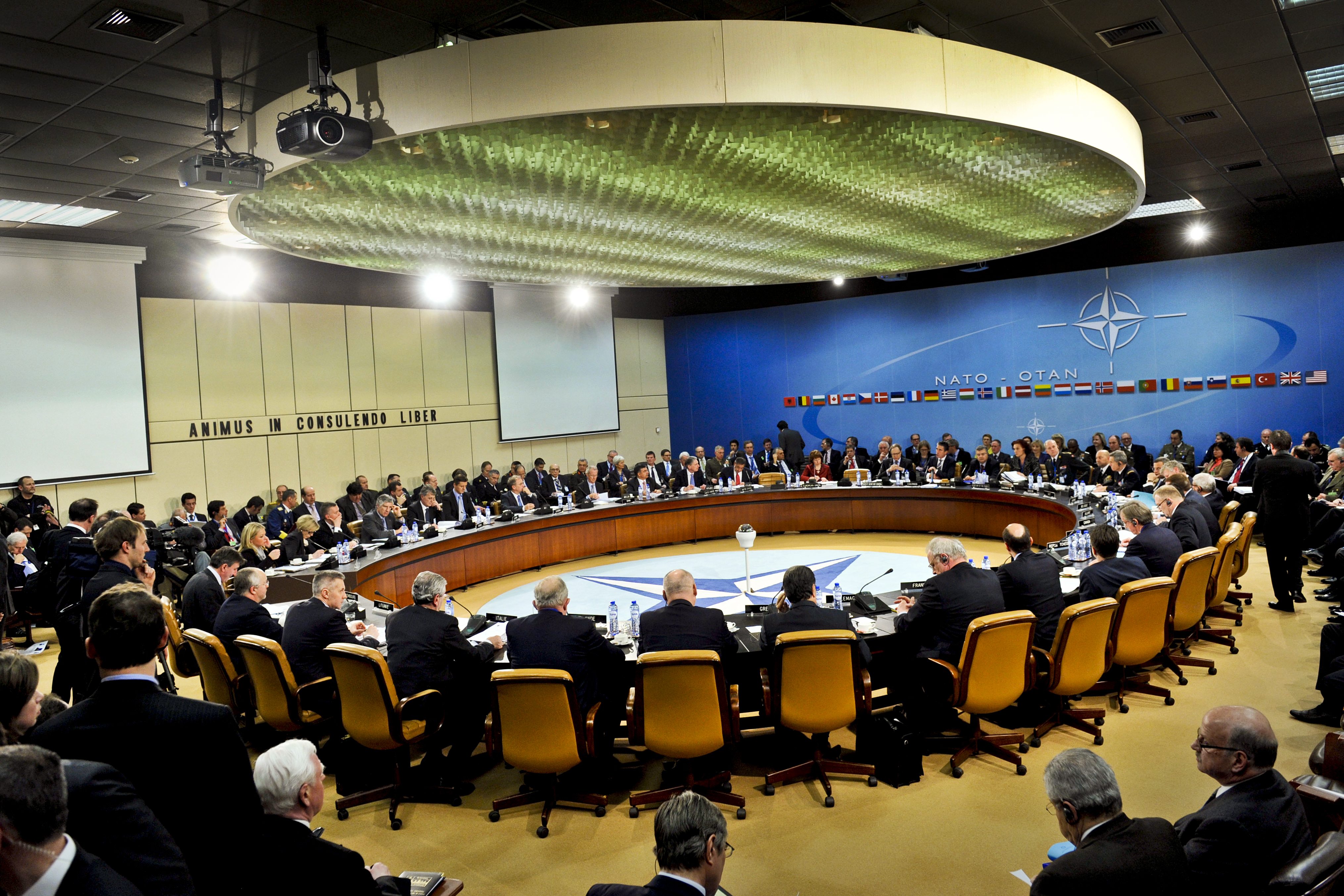
Since the end of the Cold War and the collapse of the Soviet Union, NATO has engaged in an ongoing dialogue about the nature of its mission. In this context, complex transnational crises like climate change (and its attendant implications for security) present a challenge that this regional collective security institution may be uniquely suited to address – particularly since recent studies have shown that the Mediterranean littoral may be already experiencing the effects of climate change through a rapid diminution of winter precipitation, and that this may be contributing to increased vulnerabilities in the region, particularly in the Middle East and North Africa.
As Deputy Defense minister Ivanov stated, in reference to the 2010 NATO Strategic Concept:
Key environmental and resource constraints, including health risks, climate change, water scarcity and increasing energy needs will further shape the future security environment in areas of concern to NATO and have the potential to significantly affect NATO planning and operations.
But Ivanov urged NATO to go beyond references to climate change in strategy documents, stating:
“…in addition to the common understanding of the impact of the climate change demonstrated in the modern strategic documents, a common approach to address this challenge is necessary as well”
and:
“States should monitor, assess, plan for and mitigate impact from climate change, sharing knowledge, using common approaches and providing for generally valid vulnerability assessments.”
Details of the workshop can be found on the website for NATO’s “Center of Excellence on Crisis Management and Disaster Response.”